Not Just Any Day Will Do: The Science Behind Finding Your Uterus's Optimal Transfer Moment
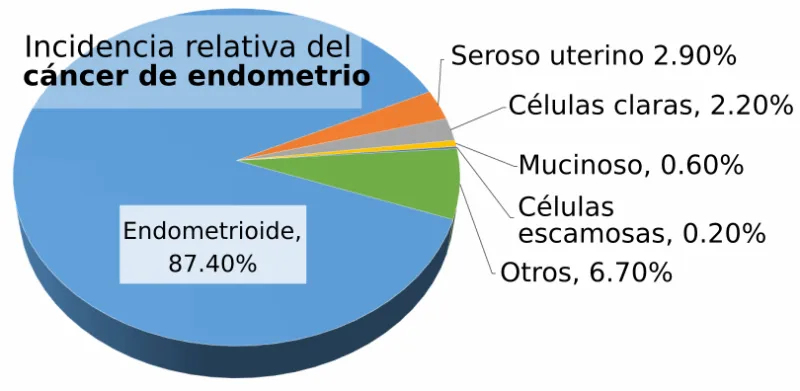
Photo: Mikael Häggström, M.D. Author info - Reusing images- Conflicts of interest: None Mikael Häggström, M.D. de la traducción Lorito987, CC BY-SA 4.0, via Wikimedia Commons
When patients prepare for an embryo transfer, much of the conversation naturally centers on the embryo itself — its grade, its chromosomal status, whether it survived the thaw. What receives comparatively less attention is the equally critical role played by the uterus. A high-quality embryo transferred into a uterus that is not yet — or is no longer — receptive is unlikely to implant successfully. This biological reality sits at the heart of a concept that reproductive endocrinologists call the window of implantation.
What Is the Window of Implantation?
The window of implantation (WOI) refers to the limited period during each menstrual cycle when the uterine lining, or endometrium, is physiologically capable of accepting and sustaining an embryo. Outside of this window, the endometrium is either not yet prepared or has already transitioned away from a receptive state.
In a natural menstrual cycle, this window typically opens approximately five to seven days after ovulation — roughly cycle days 19 to 21 in a standard 28-day cycle. During this interval, the endometrium undergoes a series of molecular and structural changes driven primarily by progesterone, which follows the estrogen-driven proliferation of the uterine lining in the first half of the cycle. Specialized cellular projections called pinopodes appear on the endometrial surface, and an intricate cascade of proteins, cytokines, and adhesion molecules is expressed — all in service of creating conditions favorable to embryo attachment.
The duration of this window is finite. Research suggests it spans roughly 24 to 48 hours in most individuals, though emerging evidence indicates meaningful variation exists from person to person.
How Clinics Establish Transfer Timing in a Medicated Cycle
In a frozen embryo transfer (FET) cycle — the most common scenario for patients using cryopreserved blastocysts — the clinic controls the hormonal environment artificially. Estrogen is administered first to build the uterine lining, followed by progesterone to trigger the luteal-phase changes that open the implantation window.
Conventional protocols assume a standardized response: most clinics initiate progesterone supplementation and schedule the blastocyst transfer at a fixed interval afterward — typically five to six days for a day-5 blastocyst. This approach works well for a significant proportion of patients. However, it rests on an assumption that every uterus responds to progesterone on an identical timeline. That assumption, it turns out, is not always accurate.
Studies have demonstrated that some individuals have a displaced WOI — meaning their endometrium reaches peak receptivity earlier or later than the population average. For these patients, transferring on the standard schedule effectively misses the window, even when the embryo is chromosomally normal and the lining appears adequate on ultrasound.
The Rise of Personalized Receptivity Assessment
The recognition that WOI displacement may explain a subset of unexplained implantation failures has driven growing interest in endometrial receptivity testing. The most widely studied commercial tool in the United States is the Endometrial Receptivity Analysis, or ERA test, developed by the Spanish biotechnology company Igenomics.
The ERA involves taking a small endometrial biopsy during a mock transfer cycle — one that mirrors the patient's actual FET protocol — and analyzing the expression of approximately 248 genes known to be associated with receptivity. An algorithm then classifies the endometrium as receptive, pre-receptive, or post-receptive at the time of biopsy and, if displaced, recommends a personalized progesterone start time for the actual transfer cycle.
The promise of this approach is intuitive: if your window opens later than average, your clinic can adjust accordingly. However, it is important for patients to understand where the science currently stands. Retrospective data and certain clinical series have shown improved outcomes in patients with repeated implantation failure who underwent ERA-guided transfers. Yet prospective randomized controlled trials — the gold standard of clinical evidence — have produced more mixed results. A landmark 2021 trial published in The New England Journal of Medicine found no significant improvement in live birth rates among unselected IVF patients who underwent ERA testing compared to those who followed a standard protocol.
The emerging consensus among many reproductive specialists is that ERA testing may offer meaningful benefit for a specific subgroup — particularly those who have experienced two or more failed transfers with good-quality euploid embryos and no other identified cause — while offering limited added value for first-time transfer patients.
Beyond the ERA: Other Factors That Shape Receptivity
Endometrial receptivity is not a single-variable equation. Several other factors influence whether the uterus is prepared to receive an embryo at the time of transfer.
Endometrial thickness and pattern. Clinics routinely use transvaginal ultrasound to assess the lining prior to transfer. A thickness of at least 7 to 8 millimeters and a trilaminar (triple-line) pattern are generally considered favorable, though neither measurement alone reliably predicts implantation success.
Progesterone levels on the day of transfer. Research has identified that elevated serum progesterone on the day of blastocyst transfer — a somewhat counterintuitive finding — may be associated with reduced implantation rates. This has led some programs to monitor progesterone levels and adjust dosing accordingly.
Endometrial pathology. Structural abnormalities such as polyps, submucosal fibroids, or intrauterine adhesions (Asherman's syndrome) can physically impair implantation. Chronic endometritis — a low-grade inflammation of the uterine lining often caused by bacterial infection — has also been associated with implantation failure and recurrent pregnancy loss, and may not produce any symptoms.
Route and timing of progesterone administration. Vaginal, intramuscular, and subcutaneous progesterone formulations have different absorption profiles, which may affect the precise timing of endometrial transformation. Some programs have begun tailoring the route of administration based on individual patient factors.
What This Means for Patients
Understanding the WOI and its variability can reframe how patients approach the transfer process. It offers an explanation for why two individuals with comparable embryos and similar lining measurements can have different outcomes — and why a failed transfer does not necessarily reflect a problem with the embryo itself.
For patients preparing for a first frozen embryo transfer, standard timing protocols are a reasonable starting point supported by decades of clinical experience. For those who have experienced repeated failures without a clear explanation, a conversation with a reproductive endocrinologist about receptivity evaluation — including its potential benefits, limitations, and costs, which are not uniformly covered by insurance — is a worthwhile step.
The biology of implantation is a two-sided conversation between embryo and endometrium. Advances in reproductive medicine are steadily improving the tools available to listen to both sides of that exchange.