The Overstimulation Paradox: How Pushing the Ovaries Harder Can Quietly Compromise Egg Quality

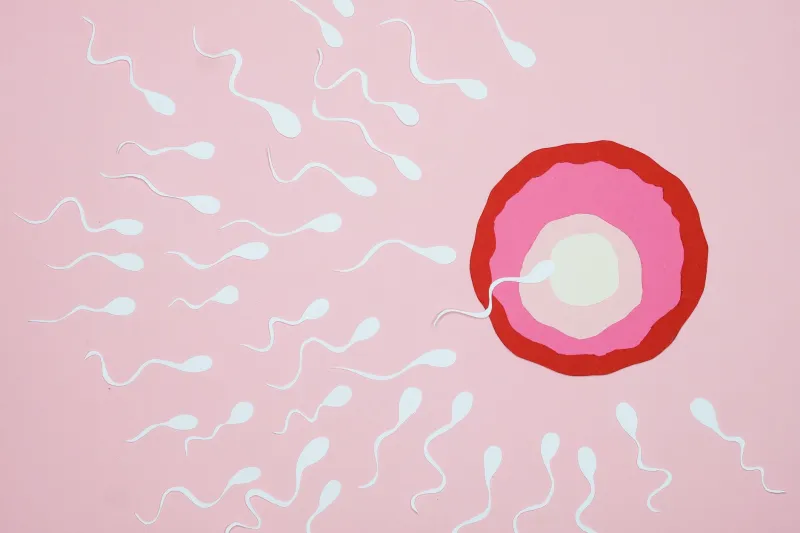
For much of IVF's four-decade history in the United States, the dominant clinical instinct has been to retrieve as many eggs as possible. The logic is intuitive: a larger pool of eggs means more fertilization opportunities, more embryos to evaluate, and a wider margin for selection. Fertility specialists have refined stimulation protocols over the years with this principle firmly in mind, calibrating gonadotropin doses to coax the ovaries into producing what nature never intended — a simultaneous cohort of mature follicles.
But the relationship between stimulation intensity and treatment outcome is not linear. A growing body of research suggests that beyond a certain threshold, aggressive hormonal dosing can introduce physiological disruptions that compromise the biological integrity of the eggs being produced. The result is a counterintuitive phenomenon that reproductive scientists are increasingly taking seriously: more stimulation does not always yield better eggs, and in some patient populations, it may yield measurably worse ones.
What Happens Inside the Follicle During Stimulation
To understand why overstimulation can backfire, it helps to consider what a maturing egg actually requires. In a natural cycle, a single dominant follicle develops over roughly two weeks under the influence of carefully modulated hormonal signals. The oocyte inside undergoes a precise sequence of molecular events — chromosomal segregation, cytoplasmic reorganization, and the completion of meiosis — that are exquisitely sensitive to the hormonal environment surrounding them.
Controlled ovarian stimulation intentionally overrides this natural selectivity. Exogenous gonadotropins — typically follicle-stimulating hormone (FSH), sometimes combined with luteinizing hormone (LH) — are administered in doses calculated to rescue follicles that would otherwise be lost, allowing multiple eggs to mature simultaneously. The ovaries respond, but not always uniformly. Follicles within the same cohort can develop at different rates, producing eggs at varying stages of maturity and with differing capacities for successful fertilization and development.
When doses are pushed aggressively, several downstream effects become relevant. Supraphysiologic estrogen levels — a predictable consequence of stimulating many follicles at once — have been associated with altered endometrial receptivity, but their influence extends to the eggs themselves. Elevated estrogen concentrations during the follicular phase may interfere with the spindle assembly checkpoint, the cellular mechanism responsible for ensuring chromosomes segregate correctly during meiotic division. Errors at this stage are a primary driver of aneuploidy, the chromosomal abnormality most commonly responsible for failed implantation and early pregnancy loss.
The Mitochondrial Dimension
Egg quality is not a single measurable variable. It encompasses nuclear competence — the chromosomal integrity discussed above — alongside cytoplasmic competence, which reflects the egg's internal infrastructure and energy-generating capacity. Mitochondria are central to this second dimension. An egg relies almost entirely on its own mitochondrial reserves to power fertilization, early cell division, and the metabolic demands of the developing embryo before the embryonic genome activates.
Research examining the effects of high-dose stimulation on mitochondrial function has produced findings that give pause. Studies in both animal models and human oocytes have identified associations between supraphysiologic gonadotropin exposure and disruptions in mitochondrial membrane potential, distribution patterns, and ATP production. These are not cosmetic concerns. An egg with compromised mitochondrial function may fertilize normally and even develop to the blastocyst stage, yet carry metabolic vulnerabilities that contribute to implantation failure or early pregnancy loss — outcomes that may never be traced back to stimulation intensity.
Who Is Most Vulnerable
Not all patients respond to aggressive stimulation in the same way. Two groups appear to be at heightened risk for quality trade-offs associated with high-dose protocols.
The first is patients with polycystic ovary syndrome (PCOS). Individuals with PCOS typically have a higher antral follicle count and are already predisposed to exaggerated ovarian responses. In this population, standard or high-dose stimulation can produce large egg cohorts that include a disproportionate number of developmentally immature or chromosomally abnormal oocytes. The raw numbers may look impressive on retrieval day, but downstream outcomes — fertilization rates, blastocyst development, euploid embryo rates — often tell a different story.
The second group is younger patients with robust ovarian reserve. Because their ovaries are highly responsive, relatively modest stimulation doses can yield substantial egg numbers. When doses are escalated beyond what their physiology requires, the incremental eggs retrieved may come at the cost of cohort quality. Several studies have now documented an inverse relationship between peak estradiol levels and euploid embryo rates in high-responder patients, a finding that has prompted some reproductive endocrinologists to deliberately moderate their approach with this group.
The Case for Milder Protocols
The concept of mild or minimal stimulation IVF is not new, but it has gained renewed clinical attention as outcome data have matured. These protocols use lower gonadotropin doses, shorter stimulation windows, or both, with the explicit goal of prioritizing oocyte quality over quantity. Some clinics have incorporated natural-cycle or modified natural-cycle approaches for carefully selected patients, retrieving one or a small number of eggs while minimizing hormonal perturbation.
The appeal of these strategies lies partly in biology and partly in patient experience. Milder stimulation reduces the risk of ovarian hyperstimulation syndrome (OHSS), a potentially serious complication that remains a concern with aggressive protocols despite advances in trigger medication strategies. It also reduces the physical burden of treatment — a factor that matters for patients who may undergo multiple cycles.
Critically, emerging data suggest that in certain populations, mild protocols can produce blastocysts with comparable or superior euploid rates relative to conventional high-dose approaches, even when the total number of eggs retrieved is lower. This reframes the success metric: the relevant question is not how many eggs were retrieved, but how many viable, chromosomally normal embryos resulted from the cycle.
Personalization as the Path Forward
The takeaway from this evolving body of research is not that stimulation should always be minimized, but that stimulation intensity should be individualized. For patients with diminished ovarian reserve, maximizing egg yield remains a legitimate priority — their biology does not permit the luxury of restraint. For high-responders, patients with PCOS, and younger individuals with strong reserve, a more measured approach may serve their reproductive goals more effectively than aggressive dosing.
This requires clinics to look beyond retrieval numbers as a primary performance indicator and patients to ask more nuanced questions during protocol discussions. What is the expected estradiol trajectory for this cycle? How does the proposed dose compare to what my ovarian reserve markers suggest I actually need? Has the protocol been adjusted based on how I responded in any previous cycles?
The science of ovarian stimulation continues to develop, and clinical practice is gradually catching up. What is already clear is that the ovaries are not a production system to be maximized at will. They are a biological environment with defined tolerances — and respecting those tolerances may ultimately be the most productive strategy of all.