When Healthy Isn't Enough: The Hidden Molecular Barriers Between Sperm and Egg
For many patients entering an IVF cycle, the early news is encouraging. Sperm parameters fall within normal ranges. Egg retrieval yields a respectable number of mature oocytes. The embryology team expresses cautious optimism. Then the fertilization report arrives, and the numbers don't match the expectation. Some eggs fertilized abnormally. Others didn't fertilize at all. And no one can offer a clear explanation why.
This scenario is more common than most patients realize, and it points to a fundamental gap between what standard fertility testing measures and what fertilization actually requires. The process of a sperm and egg successfully merging is not simply a matter of proximity or appearance. It depends on a precise sequence of molecular events — a biological handshake that can fail at multiple points, silently and invisibly, even when every measurable parameter looks perfectly normal.
What Standard Testing Actually Measures
A semen analysis evaluates three primary characteristics: concentration, motility, and morphology. These metrics provide a useful snapshot of sperm population health, but they describe what sperm look like and how they move — not how they function at the cellular level.
Similarly, egg quality assessments in an IVF lab focus largely on maturity staging and visible structural characteristics. A mature egg — one that has reached the MII stage with a visible polar body — is generally considered ready for fertilization. What cannot be observed under a standard microscope is whether that egg's internal machinery is primed and capable of completing the complex cascade that fertilization demands.
Both assessments are valuable. Neither is sufficient to predict fertilization success on its own.
The Zona Pellucida: A Gate That Doesn't Always Open
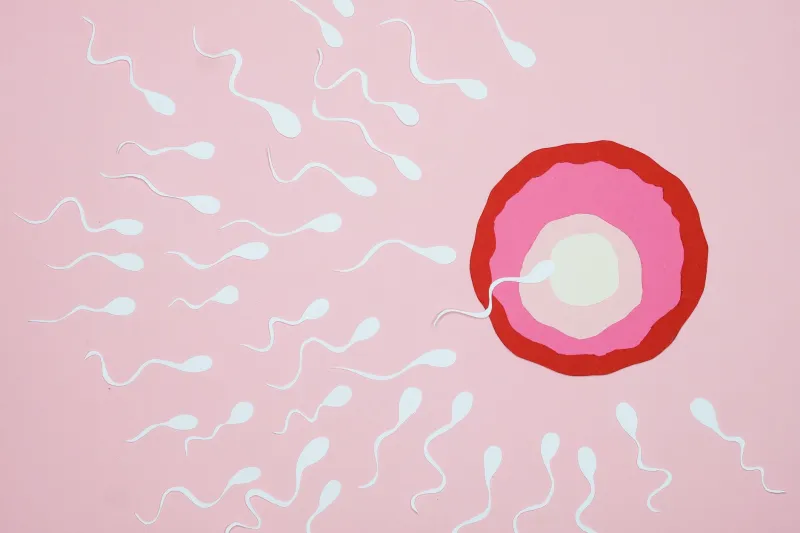
Surrounding every human egg is a specialized protein shell called the zona pellucida. This structure plays a critical role in fertilization: sperm must bind to specific receptors on its surface, then release enzymes that allow them to penetrate through it and reach the egg's plasma membrane.
This binding process is highly specific. Sperm carry surface proteins — most notably one called IZUMO1 — that must interact with a complementary receptor on the egg called JUNO. If either component is absent, structurally abnormal, or fails to engage correctly, sperm cannot complete the binding sequence regardless of how well they performed on a motility assessment.
Zona pellucida resistance is one documented cause of total fertilization failure in conventional insemination cycles. In some cases, switching to intracytoplasmic sperm injection (ICSI) — where a single sperm is injected directly into the egg, bypassing the zona entirely — resolves the problem. In others, the barrier lies deeper.
Activation Failure: When the Egg Doesn't Wake Up
Even after a sperm successfully penetrates the egg, fertilization is not complete. The sperm must trigger a process called egg activation — a series of calcium oscillations within the oocyte that signal it to resume development. This activation cascade is initiated by a sperm-specific enzyme called phospholipase C zeta, or PLCζ.
When PLCζ is absent or dysfunctional, the egg receives no activation signal. It remains in a state of metabolic dormancy. From the outside, it may appear that fertilization simply didn't occur. In reality, sperm entry happened — the molecular trigger just never fired.
Oocyte activation deficiency is a recognized cause of fertilization failure, particularly in cases where ICSI has been performed and fertilization still does not result. Artificial oocyte activation — a laboratory technique that uses calcium ionophores to manually stimulate the activation cascade — has been employed in some of these cases with variable success. It is not a routine procedure and is typically reserved for patients with a documented history of activation failure.
Chromosomal Normality Is Not the Whole Story
Preimplantation genetic testing can confirm that an embryo carries the correct number of chromosomes, and this is genuinely meaningful information. But chromosomal status does not speak to the functional integrity of the proteins, enzymes, and signaling molecules involved in fertilization itself.
A sperm can be chromosomally normal and still carry DNA fragmentation that impairs its ability to contribute effectively to early embryo development. An egg can be euploid and still possess mitochondrial dysfunction that compromises the energy supply needed to sustain the activation cascade. These are not contradictions — they reflect the reality that genetic normalcy and cellular functionality are related but distinct qualities.
This distinction matters because patients who receive normal genetic testing results and still experience fertilization failure or early developmental arrest are sometimes left without an explanation. The answer may lie not in chromosomes, but in the functional biology that standard testing doesn't reach.
Epigenetic and Proteomic Factors
Beyond chromosomes and visible structure, both sperm and eggs carry epigenetic information — chemical modifications to DNA that influence how genes are expressed without altering the genetic sequence itself. Sperm epigenetics, in particular, has emerged as an area of active research. Disruptions in sperm DNA methylation patterns have been associated with impaired embryo development and pregnancy loss, even in the absence of abnormal semen parameters.
Similarly, the protein composition of follicular fluid — the environment in which eggs mature — appears to influence oocyte quality in ways that extend well beyond what morphology scoring captures. Emerging research is beginning to map these proteomic signatures, though clinical applications remain largely in development.
What Patients Can Do With This Information
Understanding that fertilization failure can occur for reasons that standard testing doesn't detect is not a counsel of despair. It is an invitation to ask more specific questions and to work with a reproductive endocrinologist who is willing to investigate beyond the routine.
For patients who have experienced unexplained low fertilization rates or complete fertilization failure, several avenues are worth discussing with a specialist:
- ICSI versus conventional insemination: If zona pellucida interaction is suspected as a barrier, ICSI eliminates that step entirely.
- Sperm DNA fragmentation testing: This goes beyond standard semen analysis to assess the structural integrity of the genetic material sperm carry.
- Oocyte activation protocols: In documented cases of activation deficiency, assisted activation techniques may be considered.
- Stimulation protocol adjustments: Egg maturity and cytoplasmic readiness can be influenced by how an ovarian stimulation cycle is managed. A different protocol may yield eggs that are better prepared for fertilization.
- Specialized andrology evaluation: A urologist or andrologist with expertise in male reproductive medicine may identify functional sperm deficiencies that a standard semen analysis overlooks.
The Limits of What We Can Currently See
Fertilization remains, in many respects, a process that science has mapped but not fully mastered. The tools available in even well-equipped IVF laboratories are powerful — but they are observational. They can document what happened after the fact; they cannot yet predict, at an individual level, whether two specific gametes will successfully complete every step of the fertilization sequence.
For patients navigating this uncertainty, that acknowledgment can be both frustrating and clarifying. Frustrating, because it means some questions may not have immediate answers. Clarifying, because it reframes what a failed cycle actually means: not necessarily a reflection of overall health or prognosis, but evidence of a specific biological mismatch that may be addressable with the right information and the right clinical response.
The science of gamete interaction continues to advance. What remains invisible today may be measurable tomorrow. In the meantime, asking deeper questions is always the right place to start.