The 7 A.M. Problem: Why IVF Is Built for People Whose Time Isn't Their Own
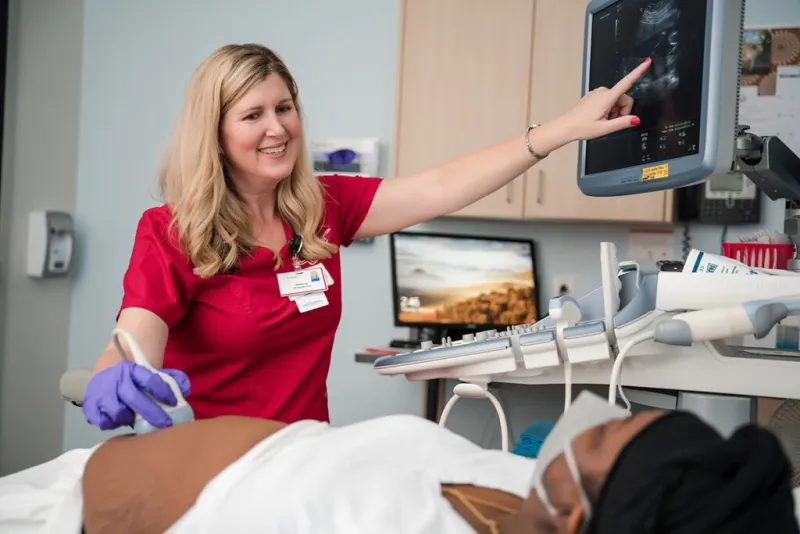
Photo: nurse preparing ultrasound room early morning fertility clinic, via www.wilmingtonhealth.com
Here is a detail about IVF that rarely makes it into the brochures: the monitoring appointments happen early in the morning, and they are not optional. Bloodwork and ultrasound must occur before ovulation-trigger timing can be set, which means patients appear at their clinic — often daily for ten days or more — between roughly 7 and 9 a.m., then go to work. A single IVF cycle can require a dozen or more such visits. The treatment, in other words, assumes you have a job that will absorb it.
Many people do not.
The Structure That Decides Who Gets Treated
The Family and Medical Leave Act guarantees many American workers unpaid, job-protected leave for serious health conditions — but infertility is not automatically covered, FMLA excludes employees at small companies, and unpaid leave is a fiction of protection for anyone living paycheck to paycheck. Layer on at-will employment, and the practical reality is stark: requesting repeated time off from an employer who does not have to accommodate you carries a risk many workers cannot afford to take.
The predictable result is a quiet sorting mechanism. Patients with salaried positions, understanding managers, or generous remote-work policies complete their cycles. Hourly workers, gig workers, and those in states without any fertility mandate routinely delay, dilute, or abandon treatment — not because medicine failed them, but because a scheduling system did.
The Improvised Choreography
Ask around any clinic waiting room at 7:30 a.m. and you will hear the logistics patients invent. Appointments booked at distant satellite offices to shorten commutes. Vague "doctor's appointments" left on work calendars. Blood draws squeezed between a school drop-off and a first meeting. Some patients disclose nothing; others disclose everything and hope. Both strategies carry costs — one in anxiety and isolation, the other, sometimes, in professional standing.
This improvisation is treated as a personal skill. It is better understood as a structural failure.
The Corporate Benefits Patchwork
Employers have noticed. Fertility benefits — covering portions of IVF, egg freezing, or donor services — have become a competitive perk at major US companies, and a genuine one. But the patchwork has a familiar shape: the workers most likely to receive coverage are salaried employees at large firms, while the broader workforce is left with insurance plans that, in many states, still classify IVF as optional or exclude it entirely. A benefit attached to employment cannot reach the people most exposed to employment precarity.
Why This Is an Equity Question
We do not usually frame medical access by who controls their mornings, but fertility care forces the issue. A treatment protocol requiring rigid, clinic-bound, early-morning attendance structurally favors the already-advantaged. Some of this is inherent to the medicine — timing matters, and monitoring windows are narrow. But some is not. Expanded telehealth for consultations, results delivered digitally, monitoring networks closer to patients' workplaces, and legislation requiring meaningful fertility coverage would each loosen the knot.
Until then, an honest description of IVF in America should include a line the brochures omit: your chances of completing treatment depend partly on your diagnosis, partly on your biology — and partly on whether your boss can be persuaded not to notice.